Infectious Diseases Fellowship
The Infectious Diseases Fellowship Program of the Northwestern University Feinberg School of Medicine is designed to prepare trainees for a career in infectious diseases through clinical practice and research training. The two-year program qualifies trainees for ABIM subspecialty boards in Infectious Diseases. The first year of the program is devoted to clinical training. The second year is highly customizable to each fellow's interests, devoted to individualized exploration of trainee interests; encompassing specialized clinical experiences and research. Trainees are encouraged to take advantage of a range of clinical and research opportunities in their area of interest.
About the Fellowship
Benefits & Wellbeing
At Northwestern ID, we take our commitment to physician, APP and trainee well being seriously.
Our APD, Dr. Jo-Ann Jose, is a graduate of the NM Scholars of Wellness Program and the co-chair of the ID Division Wellbeing Committee. Wellbeing has dedicated time during faculty and fellow meetings, and we have a number of fellow wellbeing initiatives in place.
Fellow Wellbeing is supported by:
- Monthly Fellow Dinners: Paid for by the division, these dinners are for fellows to spend time together without program staff or specific agenda.
- Fellow Meeting: These meetings are informal for the fellows and the program staff. Lunch or dinner is provided, and the focus is on check in, hearing ideas and concerns, and workshopping any ideas for interventions to make the learning environment and fellow wellbeing better.
- Faculty Coaches: Every fellow is assigned a faculty coach in their first year who works with them to refine their interests, connect to resources, and workshop scholarly work. In addition to this, program staff are always available to fellows for discussion and assistance.
- Graduation: Fellows decide what they want for their graduation celebration. Previous years have included karaoke, ping pong bar, and whirlyball!
- Wellbeing Survey: In addition to NM and NU initiatives, our division conducts a yearly wellbeing survey that is used to target wellbeing initiatives for the division. Examples of prior initiatives include creating a pod coverage system to enable easier vacation coverage, and creating a one page service playbook to optimize teaching services.
- Divisional Wellbeing Events: Organized by the Wellbeing Committee and always open to fellows.
- McGaw benefits and resources focused on wellbeing can be found here.
Education
The Cultured Bootcamp: Growth Training for the ID Fellow (or, How to Become a Plague Doctor)
First-year fellows participate in a four-week microbiology and infectious disease bootcamp, split into two-week sessions in July and January. The bootcamp combines didactic learning with hands-on training in the clinical microbiology lab, covering bacteriology, virology, mycology, parasitology and antimicrobial therapy principles. Fellows rotate through diagnostic benches, gaining practical experience diagnosing infectious diseases.
Seminars & Conferences
Weekly lectures on core infectious disease topics are presented by faculty and fellows. Monthly journal clubs and research forums showcase ongoing studies. An informal case conference, held twice a month, allows fellows and faculty to discuss complex cases. The Division of Infectious Diseases also holds joint case conferences with Ann & Robert H. Lurie Children’s Hospital of Chicago.
Key Conferences & Rounds
- Infectious Disease Case Conference: Consult teams present unique or challenging cases from inpatient and outpatient settings to encourage discussion.
- Joint NMH/Lurie Children’s Hospital Case Conference: Cases are presented as “unknowns” by fellows and discussed by attendings. First-year fellows present once per month.
- Journal Club: Fellows and faculty discuss topical or controversial journal articles.
- Research Forum: Fellows and faculty present research topics.
- Clinical Skills Lecture Series: Focuses on skills outside of core infectious diseases, such as test interpretation and patient communication.
- Pathology and Microbiology Rounds: Fellows review pathology slides and microbiology results to deepen their understanding of disease pathology and diagnostics.
- Outpatient ID Curriculum
- Quality Improvement Training
Specialty Seminars
- Clinical Microbiology Seminar: Combines lectures, bench work and case studies. Topics include transplant-related infections, rational selection of antimicrobials and antimicrobial pharmacokinetics.
- Lecture Modules: Cover areas like antimicrobial resistance, HIV treatment and sexually transmitted diseases.
- ID Grand Rounds: Seminars conducted by leading experts in a variety of infectious disease fields; fellows get dedicated time to meet with the speakers.
Clinical Experience
Northwestern Memorial Hospital Overview
Northwestern Memorial Hospital is an academic medical center in the heart of downtown Chicago with physicians, surgeons and caregivers representing nearly every medical specialty. We enjoy a teaching and service partnership with Northwestern University Feinberg School of Medicine, an integration that provides patients access to leading-edge clinical trials and fosters an environment of world-classpatient care, academic inquiry and innovative research.
Northwestern Medicine is proud to have five hospitals ranked among "America's Best", including Northwestern Memorial Hospital, the only Illinois hospital to be ranked No. 1 for 15 straight years, by U.S. News & World Report, 2026-2027. Anchored by Northwestern Memorial Hospital, which is nationally ranked in 10 clinical specialties, we're leading the quest for better care in the Chicago area and beyond.
The downtown medical campus includes Prentice Women's Hospital, Feinberg Pavilion, Galter Pavilion, Olson Pavilion, Arkes Family Pavilion, Lavin Pavilion and a number of other facilities and physician offices, totaling over 900 beds. The campus is designed to be a health and wellness destination, and a launch pad for community involvement. In addition to providing medical services, buildings on the campus are also home to restaurants, retail stores and pharmacies that have been handpicked based on community feedback to provide both healthy and local choices.
Inpatient Consult Service
Fellows rotate through three inpatient consult services:
-
Medical Infectious Diseases Consult Service: Manages infectious disease consultations for general medicine, subspecialties, neurology, dermatology, psychiatry and medical ICU patients. The team includes an attending physician and a fellow, with potential participation from residents and medical students.
-
Surgical Infectious Diseases Consult Service: Oversees patients in general and specialty surgery, surgical ICUs, hematology/oncology, obstetrics/gynecology and rehabilitation with pre- and post-operative infectious disease complications. The team includes an attending physician and a fellow, with potential participation from residents and medical students.
-
Transplant Infectious Diseases Consult Service: Provides care for solid organ, bone marrow and stem cell transplant recipients with infectious disease issues. This is a multidisciplinary team, comprising of an attending physician, a fellow, and an advanced practice provider, with potential participation from residents and medical students.
- Hospital/Observation Infectious Disease Consult Service: Provides care for hospitalist and observation services. The team includes an attending physician and an advanced practice provider.
Outpatient Experiences
-
Infectious Diseases Outpatient Clinic: Offers follow-up care for patients seen on the inpatient consult services and those referred for infectious disease management. Provides primary care and consultative services for HIV, travel-related illnesses and general infectious diseases, with approximately 10,500 encounters annually.
-
Sexually Transmitted Disease Clinic: Offers walk-in care for sexually transmitted diseases, including evaluation, treatment, Hepatitis A and B vaccinations, HIV counseling and testing and safe sex education. Manages about 320 patient encounters each year.
-
Travel Medicine and Immunization Clinic: Prepares international travelers with immunizations, malaria prophylaxis and advice on infectious disease prevention.
- Vivent Health-TPAN Chicago Clinic: A Northwestern ID partnership with a community-based medical home model for HIV and PrEP care delivery on the north side of Chicago. Fellows rotate with Northwestern faculty in their Vivent clinic. Dr. Jo-Ann Jose serves as the medical director, and Dr. Amesika Nyaku provides clinical care.
Research
First Year
During the first year, fellows explore research opportunities across Northwestern University to identify suitable mentors and projects. Research Forums, presented by faculty in the Division of Infectious Diseases, showcase ongoing projects and potential areas of study. Kelly Bachta, MD, PhD, serves as the director of fellowship research training and, along with an individual research committee, mentors each fellow throughout their training.
Second & Third Years
The second and optional third years of fellowship are dedicated to mentored research in basic, translational, or clinical science, selected by the fellow and approved by the Infectious Diseases Fellowship Committee. The objective is to build the research skills needed for a successful academic career.
The Division of Infectious Diseases was awarded a prestigious NIH T32 training grant, along with matching funds from the Department of Medicine, to support two of the three research positions in the second and optional third years. This grant also covers tuition for the two-year Master of Science in Clinical Investigation degree. Additionally, the Design Industries Foundation Fighting AIDS (DIFFA) funds one fellow annually, designated as the DIFFA Chicago Fellow, focusing on HIV/AIDS care or research. Other departmental and university grants support eligible fellows in areas like microbiology-immunology and transplantation.
Fellow Research Project Examples
- Mechanisms of Acinetobacter baumannii virulence in pneumonia and bloodstream infections
- Hepatitis C co-infection's impact on HIV progression
- Quantiferon testing performance in solid-organ transplant recipients
- Genomic basis of strain variations in Pseudomonas aeruginosa virulence
- Control strategies for multi-drug resistant Acinetobacter baumannii
- Molecular epidemiology of HIV in Black men who have sex with men
- Postpartum retention strategies in HIV care
- Clinical trial evaluation of two-drug vs. three-drug antiretroviral therapy for HIV
- Virulence and relapse features of Mycobacterium avium complex species
- Genetic variation in the rtxA1 gene of Vibrio vulnificus
- New genes or mutations associated with antimicrobial resistance in CRE isolates
- Substance abuse and cardiovascular risk in HIV-infected men
- Structural brain abnormalities in early HIV infection
- Outbreak prevention strategies among surgical units
Application Process
Application to the Fellowship Program may be made through ERAS beginning in July.
The completed application should include three letters of reference.
Personal interviews—scheduled by invitation only—take place between August and October in order to accommodate scheduling demands. During the interview, the applicant meets with the program director and selected members of the Infectious Diseases faculty and fellows.
The Fellowship Program honors the match date for the National Residency Match Program.
Eligibility
- Applicants considered for admission to the Northwestern University Infectious Diseases Training Program have completed training in an approved U.S. Residency Program that provides ABIM eligibility in Internal Medicine.
- Previous research experience is not required.
Citizenship & Residency
The NIH T32 Training Grant that supports most fellows during the research years requires U.S. citizenship or permanent residency status. Therefore, only U.S. citizens and permanent residents are eligible for positions on the T32 training grant and for a third year of fellowship.
- J-1 Visa Holders will be considered only for the two-year clinical track
- H-1B visas will not be considered.
Non-U.S. citizens who are entering a Northwestern ACGME-accredited training program are required to obtain visa sponsorship prior to beginning their program.
Meet Our Fellows
First Year

Helena Herber, MD
MD: Loma Linda University School of Medicine
Residency: Kettering Health Network/Kettering Medical Center

Vaishnavi Kulkarni, MBBS
MD: Adichunchanagiri Institute of Medical Sciences, India
Residency: Norton Community Hospital
Second Year

Manasa Brown, MD
MD: Rush Medical College of Rush University Medical Center
Residency: University of Chicago
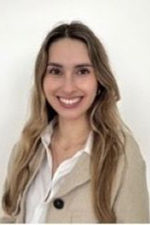
Ariane Paz y Mino, MD
MD: Universidad San Francisco de Quito Colegio de Ciencias de la Salud
Residency: Mass General Brigham Salem Hospital
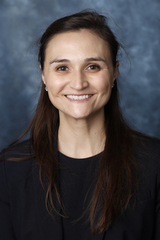
Corinne Thornton, MD
MD: University of Illinois College of Medicine
Residency: Indiana University School of Medicine (Med/Peds)
Third Year
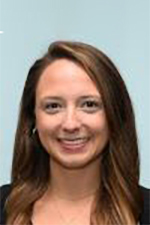
Elizabeth Nagel, MD
MD: University of Illinois College of Medicine
Residency: Indiana University of Missouri (Med/Peds)
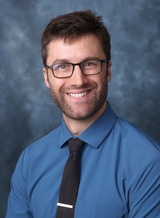
James McCluskey, MD
MD: University of Minnesota Medical School
Residency: University of Nebraska MEdical Center (Med/Peds)
More Information
Further program details, including our housestaff manual and a sample training contract, are available on our McGaw Medical Center Graduate Education website. We also recommend reading through our FREIDA listing (program number 146-16-21-059).