News & Announcements
Read the latest news from Northwestern University Feinberg School of Medicine’s Department of Medicine and learn more about our faculty’s latest achievements, awards and honors.
-
 10.12.2026
Northwestern Medicine scientists have identified a stem-like state in small-cell lung cancer that identifies a group of patients with exceptionally poor outcomes following chemoimmunotherapy, according to a study published in Cell Reports Medicine.
-
 09.29.2026
Clyde W. Yancy, MD, MSc, the Magerstadt Professor and chief of Cardiology in the Department of Medicine and Vice Dean for Health Equity, has been selected as the recipient of the 2026 Herbert W. Nickens Award from the Association of American Medical Colleges.
-
 09.28.2026
Faculty, trainees, students and staff gathered on September 23 for the 16th Annual Medical Education Day, a yearly celebration of teaching excellence, educational innovation and scholarship across the Feinberg community.
-
 09.23.2026
Northwestern scientists have developed an AI tool that rapidly and successfully measures colonoscopy quality by reviewing footage of the procedure.
-
 09.22.2026
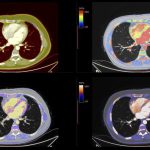
A PET/CT radiotracer demonstrated high sensitivity and specificity for detecting cardiac amyloidosis and could provide diagnostic clarity when standard imaging tests do not provide definitive results, according to a recent clinical trial published in JAMA.
-
 09.21.2026
A new Northwestern University study offers a potential solution to muscle loss during GLP-1 therapy: an experimental RNA therapy that induces the body to burn calories, enhancing the benefits of the weight-loss treatment.
-
 09.15.2026
An experimental drug has been shown to improve symptoms, exercise capacity and heart failure status in patients with an inherited heart disease, according to a pair of newly published studies.
-
 09.10.2026
Combining two therapies may improve immune response in a subgroup of patients with metastatic castration-resistant prostate cancer who responded poorly to initial treatment, according to a Northwestern Medicine study published in The Journal of Clinical Investigation.
-
 09.03.2026
A new risk stratification model developed by Northwestern Medicine scientists may help better identify patients who have a lower risk of kidney transplant rejection, which can inform more personalized treatment and care strategies that present fewer adverse side effects, as detailed in a recent study published in Nature Communications.
-
 09.02.2026
A new Northwestern Medicine study has uncovered a biological mechanism that may explain why a subset of tumors unexpectedly grows at an accelerated rate after being treated with certain immunotherapies, according to findings published in Cancer Discovery.
-
09.02.2026
Northwestern Medicine scientists have developed a novel high-resolution 3D spatial genomics platform that may enhance future research about how genome organization and genetic alterations contribute to the development of disease, including cancer, as detailed in a recent study published in Nature Methods.
-
 08.31.2026
A new Northwestern Medicine study shows that a test known as a coronary artery calcium scan may be most valuable only for a specific group of patients.
-
 08.18.2026
Through a longstanding collaboration with the University of Global Health Equity in Rwanda, Feinberg medical educators support and train educators who will go on to teach thousands of future physicians, nurses and other health professionals.
-
 08.14.2026
A recent Northwestern Medicine study published in JCI Insight has uncovered new clues about why people with systemic sclerosis, also known as scleroderma, frequently develop debilitating esophageal complications.
-
 08.11.2026
The tissue microenvironments surrounding HIV-infected immune cells look a lot like those surrounding cancerous tumors, according to a new Northwestern study.
-
 07.31.2026
Northwestern Medicine investigators have received an R01 research grant from the National Heart, Lung, and Blood Institute to evaluate a new simulation-based mastery learning curriculum to help patients and their caregivers improve self-care for chronic heart disease.
-
 07.30.2026
Northwestern scientists have developed a DNA-driven process to induce protein crystallization that can help reveal protein structures and enable the development of new flexible biomaterials.
-
 07.28.2026
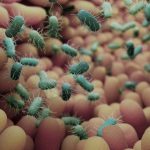
New Northwestern Medicine research published in Nature Communications suggests that a metabolite produced by gut bacteria when they digest dietary fiber can leave a lasting molecular imprint on intestinal cells, promoting immune tolerance and protecting against inflammatory bowel disease-like conditions long after exposure ends.
-
 07.22.2026
Northwestern scientists have developed a novel wireless sensor device that can continuously monitor skin elasticity in patients with soft tissue disorders including lymphedema and scleroderma, which can support early disease detection and better inform care strategies, as detailed in a study published in Science Advances.
-
 07.20.2026
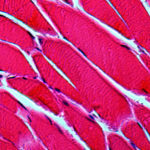
A Northwestern Medicine study has uncovered how chronic defects in muscle membrane repair can fuel harmful inflammation, according to the study published in JCI Insight.
-
 07.16.2026
A new Northwestern Medicine study has uncovered how a key immunoregulatory receptor plays an unexpected dual role in promoting T-cell exhaustion during chronic infection and cancer, according to findings published in the Proceedings of the National Academy of Sciences.
-
 07.14.2026
A leading-edge immunotherapy may extend survival for patients with one of the most aggressive forms of blood cancer, according to newly published five-year results from a major clinical trial in the journal Blood.
-
07.08.2026
A landmark study from the Northwestern Medicine Canning Thoracic Institute, published in JAMA, suggests lung transplantation can significantly extend survival in select patients with advanced lung cancer.
-
 06.23.2026
The Master of Science in Biomedical Informatics program — previously known as the Master of Science in Health and Biomedical Informatics — will launch in the fall offering two tracks: one in bioinformatics and another in health informatics.
-
 06.18.2026
One in three middle-aged American adults ages 35 to 64 cannot consistently read prescription instructions correctly, understand medical forms or recall details from doctor visits involving chronic condition diagnoses, according to a recent study.
-
 06.17.2026
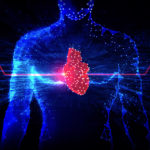
Dysfunction in the lymphatic system has been identified as a hidden driver of life‑threatening heart valve disease in patients with Marfan syndrome, according to a new Northwestern Medicine study published in The Journal of Clinical Investigation.
-
 06.16.2026
Scientists have discovered a new communication circuit between immune cells in the intestines, a potential therapeutic target to improve inflammatory bowel disease outcomes, according to a recent study published in the Proceedings of the National Academy of Sciences.
-
 06.15.2026
The Division of Gastroenterology and Hepatology at Feinberg has a distinct strength in understanding how behavior and lifestyle influence gastrointestinal (GI) health. The Division conducts research aimed at improving treatments for disorders of the digestive tract and related organs.
-
 06.12.2026
A bacterial pathogen that causes colitis and colorectal cancer creates a nutrient-rich niche and “rewires” epithelial cell signaling in the inflamed gut, which promotes bacterial colonization and disease, mechanisms that may be promising therapeutic targets, according to a recent study published in the journal Cell.
-
 06.04.2026
Northwestern Medicine scientists have discovered that little-studied DNA structures play a central role in organizing the human genome and controlling gene activity, according to a new study published in the Proceedings of the National Academy of Sciences.